BIC Facility Codes
Search the container facility database
BIC Codes
Search container owner codes

The seven industry bodies dedicated to container safety, collaborating as the Cargo Integrity Group, highlight an independent study carried out by researchers at Italian University Politecnico di Torino into shipper and forwarder application of the CTU Code. The 2023 survey yielded encouraging signs of adoption and highlighted several convincing arguments – including financial benefits for its use
9th November, 2023
The survey highlights multiple benefits to CTU Code users including:
- Improved safety, reputation and supply chain coordination
- Decreased cargo damage, environmental impact and operational inefficiencies
- Those using the CTU Code incurred no extra costs in employees, contractors, or vehicles
- Any increase in loading and waiting times were typically offset by CTU Code related efficiencies overall
- Annual costs and penalties reduced from €670,000 pre-implementation of the Code to €13,000 post-implementation
- Extra costs as a percentage of revenue reduced from 37% to 10%
In the words of the report’s authors (Bruno, et al.), “The application of the CTU Code to cargo loading and transportation processes can increase the safety level of transport activities, and also improve business processes and competitiveness. The results show that the use of the CTU Code provides an increase in safety with a drastic reduction of loading accidents and damage to goods, as well as important benefits in terms of costs, improved efficiency, corporate image and reduced environmental impact.”
The Cargo Integrity Group continues its efforts to underline the positive effects of the widespread use of guidance in the CTU Code, which is the Code of Practice for Packing of Cargo Transport Units jointly published by the International Maritime Organisation (IMO), the International Labour Organization (ILO) and the United Nations Economic Commission for Europe (UNECE)¹.
The Group is dedicated to improving the safety, security and environmental performance throughout the logistics supply chain. In particular, it is concerned to promote safe methods to those responsible for the packing of cargoes in containers, securing them and accurately declaring them.
Welcoming the Politecnico survey, the CEO of ICHCA, one of the Group’s founding associations, Richard Steele said, “As far as we are aware, this is the first example of publicly available empirical evidence about the use of the CTU Code made by forwarders, shippers and others responsible for safe packing. Notwithstanding the regional focus of this particular survey, we believe the results to be genuinely encouraging. They show that good operational management, efficiency and safety are partners, not opposites.”
To facilitate a greater degree of understanding and wider use of what is a lengthy and complex document, the Group has published a ‘Quick Guide’ to the CTU Code, together with an editable and saveable Checklist of actions and responsibilities for the guidance of those undertaking the packing of cargoes in containers. These materials are now available in all six of the United Nations’ official languages, as well as Italian².
The full results of the Politecnico di Torino’s survey can be accessed here https://www.sciencedirect.com/science/article/pii/S2590198223000738?via%3Dihub
Footnotes:
¹http://www.imo.org/en/OurWork/Safety/Cargoes/CargoSecuring/Documents/1497.pdf
² Arabic, Chinese, English, French, Russian and Spanish. Downloadable HERE
ENDS
Cargo Integrity Group Media Contacts
 |
Bureau International des Containers (BIC) Douglas Owen, Secretary General, [email protected] |
 |
Container Owners Association (COA) Patrick Hicks, Secretary, [email protected] |
 |
Global Shippers Forum (GSF) James Hookham, Secretary General, [email protected] |
 |
International Cargo Handling Co-ordination Association (ICHCA International) Maria Udy, Media contact, Portcare International, [email protected] |
 |
FIATA (International Federation of Freight Forwarders Associations) Amanda Stock, Communications Officer, [email protected] |
 |
TT Club Peter Owen, Media contact, Portcare International, [email protected] |
 |
World Shipping Council (WSC) Anna Larsson, Communications Director, [email protected] |
BIC Facility Codes
Search the container facility database
BIC Codes
Search container owner codes

BIC Facility Codes
Search the container facility database
BIC Codes
Search container owner codes
September 28th, 2023
FOR IMMEDIATE RELEASE

BIC is pleased to announce that Mr Lars Kjaer, Senior Vice President at World Shipping Council is this year’s recipient of the BIC Award.
Presented during the Sub-Committee on Carriage of Cargoes and Containers 9th session at IMO Headquarters in London, the award was presented by BIC Secretary General Douglas Owen and Vice Chairman Lars Lorenzen.
The BIC Award was founded in 2013 to recognize individuals and organizations for significant contributions to the container shipping industry in the areas of safety, security, sustainability and standardizations – the four pillars of BIC’s mission. In selecting Mr. Kjaer the BIC Board of Directors cited Mr. Kjaer’s longstanding support of standardization through his work in ISO TC104, his tireless efforts over many years to improve safety in the supply chain, and his keen dedication to limiting invasive species traveling via the container pathway.
Lars Kjaer has been with the World Shipping Council since its inception in the year 2000. Lars is involved in a multitude of safety, trafficking and contaminating pest issues and other regulatory matters. He participates on behalf of WSC in meetings at the IMO regarding safety, transport of containers, dangerous goods and the Facilitation Convention. He is also chairman of ISO Technical Committee (TC 104) that is responsible for all container-related standards.
Prior to joining the World Shipping Council, Lars served as the Washington Representative for the Council of European and Japanese Shipowners’ Associations (CENSA), following a career with the Royal Danish Embassy in Washington, D.C. and at the Danish Delegation to NATO, in Brussels.
“The BIC Award was founded to recognize outstanding achievement in the areas of safety, security, standardization and sustainability, and Lars Kjaer clearly qualifies in every one of those categories. We commend Lars for his longstanding dedication to improving our industry” stated BIC Chairman Giordano Guerrini.
Lars Kjaer stated: ‘…I am truly honored and humbled to be this year’s recipient of the BIC award. It was particularly gratifying to receive the reward at the IMO HQ during the CCC 9 session where the shipping industry continues to work with regulators to further promote our shared goal of enhanced safety at sea and in the global containerized supply chain”.
ENDS – 367 Words
Photo credit: Sarah Weal
About BIC
The Bureau International des Containers (BIC) was founded under the auspices of the International Chamber of Commerce in 1933 as a neutral, non-profit, international organization. The BIC seeks to promote efficiency, safety, security, standardization, and sustainability in the container supply chain and today has over 2800 container owning and operating members in 128 countries. Publisher of the BIC Code Register since 1970, the BIC also operates the BoxTech Global Container Database (bic-boxtech.org), providing API-accessible equipment details to help improve efficiency and safety in the supply chain, as well as the BIC Facility Code Database, providing harmonized codes to identify over 17,000 container facilities in 190 countries. The BIC also operates the Global ACEP Database under the guidance of the IMO. The BIC holds official observer status as an NGO at the International Maritime Organization (IMO), the World Customs Organization (WCO), and the United Nations Centre for Trade Facilitation and Electronic Business (UN/CEFACT) and works closely with the ISO and other standards organizations. Learn more at www.bic-code.org.
About World Shipping Council
The World Shipping Council is the united voice of liner shipping, working with policymakers and industry groups to shape the future growth of a socially responsible, environmentally sustainable, safe, and secure shipping industry. We are a non-profit trade association with offices in Brussels, Singapore, London and Washington, D.C. The WSC has observer status at the UN IMO. Read more at www.worldshipping.org
BIC Facility Codes
Search the container facility database
BIC Codes
Search container owner codes

MEDIA RELEASE
CALVERTON, MD (August 31, 2023) — The Intermodal Association of North America (IANA) and the Bureau International des Containers (BIC) are extending their collaboration on container facility identification, which began in 2021, to include geofencing. IANA will take the leadership role in collecting and reviewing geofence coordinates for North America intermodal facilities for inclusion in the global BIC Facility Code database and in the IANA Intermodal Facilities Directory.
The BIC Facility Code database is a global database of over 17,000 container facilities and provides a facility name and address, latitude/longitude point and harmonized facility code. As part of the 2021 harmonization exercise, the locations in IANA’s North American Intermodal Facility database were assigned a global BIC Facility Code, and an API synchronization was put in place.
The database is being expanded to include geofences coordinates to help support the industry’s adoption of smart containers. The methodology and recommendations for the project were developed by a global working group assembled by the United Nations Center for Trade Facilitation and Electronic Business (UN/CEFACT) and includes ocean carriers, IoT providers, and software platforms.
The objective is to provide a neutral open library of geofences linked to container handling facilities to ensure that all parties in the supply chain can reference the same geofence for a facility regardless of the provider or platform they may be using, thus improving reliability, interoperability as well as safety and security.
BIC staff will attend IANA’s Intermodal EXPO in Long Beach, September 11-13 to explain the new platform and to assist depot and terminal operators/owners in setting up geofences for their facilities.
# # #
About IANA
IANA’s roster of corporate members includes railroads, ocean carriers, ports, intermodal truckers and over-the-road highway carriers, intermodal marketing and logistic companies, and suppliers to the industry. This roster gives IANA a unique position within the intermodal community, one which is authoritative, holistic and able to affect change that benefits everyone. IANA consistently supports the shared needs, interests, and goals of its diverse members – regardless of mode or function – with business solutions, education, and networking opportunities. www.intermodal.org.
About BIC
The Bureau International des Containers (BIC) was founded under the auspices of the International Chamber of Commerce in 1933 as a neutral, non-profit, international organization. The BIC seeks to promote efficiency, safety, security, standardization, and sustainability in the container supply chain and today has over 2600 container owning and operating members in 125 countries. Publisher of the BIC Code Register since 1970, the BIC also operates the BoxTech Global Container Database (bic-boxtech.org), providing API-accessible equipment details to help improve efficiency and safety in the supply chain, the BIC Facility Code Database, and the Global ACEP Database. The BIC holds official observer status at the International Maritime Organization (IMO), the World Customs Organization (WCO), and the United Nations Centre for Trade Facilitation and Electronic Business (UN/CEFACT). www.bic-code.org.
BIC Facility Codes
Search the container facility database
BIC Codes
Search container owner codes
BIC Facility Codes
Search the container facility database
BIC Codes
Search container owner codes
BIC Facility Codes
Search the container facility database
BIC Codes
Search container owner codes

MEDIA RELEASE
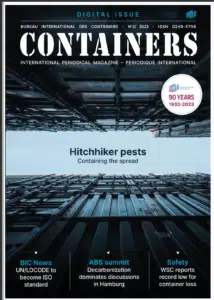
17 July 2023 – The international supply chain is probably one of the most complex networks man has created, carrying 250 million containers every year. It’s safe and smooth functioning relies on everyone in the chain taking responsibility for the integrity and cleanliness of the container when in their care. To help address this, the revised Unified Container Inspection & Repair Criteria (UCIRC) published by BIC, ICS and WSC now includes inspection criteria for container depots and other container handover facilities to address pest contamination on and in containers.
The first edition of the Unified Container Inspection & Repair Criteria (UCIRC), designed for use at all container depots and container interchanges, was developed and published by ICS in 2000. The publication details the criteria to be considered in the context of inspection for physical damage or structural deformations of the sea container. Since then, the industry has developed and, maybe most importantly, contaminating pests hitchhiking in or on containers has increasingly become an issue of concern. However, the previous editions of UCRIC did not address inspection for visible pest contamination on the container, resulting in the possibility that containers might be dispatched empty from container depots with hitchhiker pests.
To address this issue, Bureau International des Containers (BIC), the International Chamber of Shipping (ICS) and the World Shipping Council (WSC) joined to ensure the UCIRC was adjusted to meet today’s requirements. The revised UCIRC has been updated to make inspection for and removal of visible pest contamination an integral part of the container inspection and dispatch process. The document outlines special provisions to inspect for pest contamination at container depots as well as at all other interchange points.
Just as any major structural deficiencies must be repaired, any pest contaminants must be taken care of prior to the dispatch of the empty container to the shipper. The revised UCIRC make this clear and also expressly reference the recently updated Prevention of Pest Contamination of Containers: Joint Industry Guidelines for Cleaning of Containers by BIC, COA, IICL and WSC. The two publications in tandem demonstrate the commitment of the container shipping industry to play a proactive role in minimizing pest contamination via the sea container pathway.
The global container supply chain stretches across the ocean and all continents of our world, and it falls on the parties in the supply chain to keep it safe.
Download your free copy
English: https://www.bic-code.org/wp-content/uploads/2023/07/UCIRC_BrandedFolderDocument2023_EN-3.pdf
##
Contact
Anna Larsson, WSC Communications Director
Tel: +47 484 06 919
Email: [email protected]
Katerina Dimitropoulos, ICS Communications Manager
Tel: +447497 363 434
Email: [email protected]
About World Shipping Council
The World Shipping Council is the united voice of liner shipping, working with policymakers and industry groups to shape the future growth of a socially responsible, environmentally sustainable, safe, and secure shipping industry. We are a non-profit trade association with offices in Brussels, Singapore, London and Washington, D.C. The WSC has observer status at the UN IMO. Read more at www.worldshipping.org
About Bureau International des Containers
The Bureau International des Containers (BIC) was founded in 1933 under the auspices of the ICC as a neutral, non-profit, international organization. BIC seeks to promote efficiency, safety, security, standardization and sustainability in the container supply chain. Publisher of the BIC Code Register since 1970, BIC also operates other industry databases, including the BoxTech Global Container Database (bic-boxtech.org), the BIC Facility Code Database, and the Global ACEP Database. BIC holds official observer status at IMO, WCO, and UN/CEFACT. BIC participated in developing the CTU Code. www.bic-code.org
About ICS
The International Chamber of Shipping (ICS) is the principal international trade association for merchant shipowners and operators, representing all sectors and trades and over 80% of the world merchant fleet – www.ics-shipping.org.
BIC Facility Codes
Search the container facility database
BIC Codes
Search container owner codes

BIC Facility Codes
Search the container facility database
BIC Codes
Search container owner codes

MEDIA RELEASE
New, updated version released of “Prevention of Pest Contamination of Containers: Joint Industry Guidelines for the Cleaning of Containers”
24 March 2023 – Every year, 241 million containers are transported across the seas with over 7 trillion dollars’ worth of food, clothes, electronics and other goods we all need. While crucial for the smooth functioning of the global supply chain, containers and their cargoes can also harbour and transfer contaminating pests. All parties in the supply chain have a shared responsibility for stopping the spread of pests by keeping cargo and containers clean when in their custody. The updated Prevention of Pest Contamination of Containers: Joint Industry Guidelines for the Cleaning of Containers published by BIC, COA, IICL and WSC provide easy-to-use best practices to help everyone carry out their responsibilities.
The original version of the Joint Industry Guidelines for the Cleaning of Containers, published in 2017, was well received by regulators and industry, and has become a valued source of guidance when it comes to preventing pest contamination. Since then, we have learned more about the transfer of pests, our climate conditions have changed, and trade has grown. Together these developments send a clear message: Pest contamination is an issue of societal concern. In response, industry parties representing different parts of the container supply chain – the Bureau International des Containers (BIC), the Container Owners Association (COA), the Institute of International Container Lessors (IICL) and World Shipping Council (WSC) – are now launching an updated version of the guidelines.
Experience shows that the introduction of new pests can severely upset an existing ecosystem, with serious ecological consequences and possibly billion dollar impacts on a nation’s economy. Regulators and national authorities play a central role in stopping the transfer of pests, but given the scale of global trade it is prevention – stopping pests from entering cargo or containers in the first place – that is the best solution. With the updated “Prevention of Pest Contamination of Containers: Joint Industry Guidelines for the Cleaning of Containers” BIC, COA, IICL and WSC are looking to further improve the level of prevention across the supply chain to stop the transfer of pests.
“When each party in international container supply chains makes sure to start and end their work with clean cargo and containers, then containers will reach their destination faster while our agriculture, forestry and natural resources are preserved,” says Lars Kjaer, Senior Vice President of WSC.
All partiesin the supply chain – from manufacturers, to exporters, packers, freight forwarders, inland logistics providers, warehouse storage providers, ocean carriers, and importers – must take responsibility for maintaining cargo and containers clean when in their care. By applying the best practices described in this Guide the parties can keep containers and their cargoes clean, fulfilling their custodial responsibility and reducing the risk of pest contamination and transfer.
Download your free copy here: Prevention of Pest Contamination of Containers: Joint Industry Guidelines for the Cleaning of Containers
The “Prevention of Pest Contamination of Containers: Joint Industry Guidelines for the Cleaning of Containers” are complementary to the direction provided in various guidelines published by the IPPC and in the IMO/ILO/UNECE Code of Practice for Packing Cargo Transport Units (“CTU Code”) regarding prevention of pest contamination of containers.
##
Contact
Anna Larsson, Communications Director
Tel: +47 484 06 919
Email: [email protected]
About World Shipping Council
The World Shipping Council is the united voice of liner shipping, working with policymakers and industry groups to shape the future growth of a socially responsible, environmentally sustainable, safe, and secure shipping industry. We are a non-profit trade association with offices in Brussels, Singapore, London and Washington, D.C. The WSC has observer status at the UN IMO. Read more at www.worldshipping.org
About Bureau International des Containers
The Bureau International des Containers (BIC) was founded in 1933 under the auspices of the ICC as a neutral, non-profit, international organization. BIC seeks to promote efficiency, safety, security, standardization and sustainability in the container supply chain. Publisher of the BIC Code Register since 1970, BIC also operates other industry databases, including the BoxTech Global Container Database (bic-boxtech.org), the BIC Facility Code Database, and the Global ACEP Database. BIC holds official observer status at IMO, WCO, and UN/CEFACT. BIC participated in developing the CTU Code. www.bic-code.org
About Container Owners Association
The Container Owners Association is the international organisation representing the common interests of all owners of freight containers. The principle aims of the COA are to provide global expertise, to promote common standards and to facilitate international lobbying. More information is available at: www.containerownersassociation.com
About Institute of International Container Lessors
The Institute of International Container Lessors (IICL) is the leading trade association of the container and chassis leasing industry. The IICL’s membership engages in leasing marine cargo containers and chassis to vessel operators and other organizations on a broad international basis. Members own or manage a significant portion of the global leased container and U.S. chassis fleets. More information is available at: www.iicl.org
BIC Facility Codes
Search the container facility database
BIC Codes
Search container owner codes

BIC Facility Codes
Search the container facility database
BIC Codes
Search container owner codes
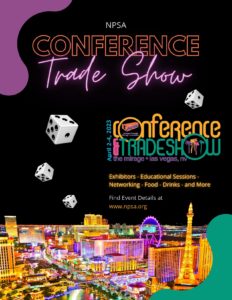
BIC will be present at NPSA Exhibition, Las Vegas, 2-4 April 2023 on Stand n° 1727
Click here to know how to register
BIC Facility Codes
Search the container facility database
BIC Codes
Search container owner codes